
How Hospital Management Software Is Solving Uganda’s Healthcare Revenue Crisis — And Improving Patient Outcomes

The silent revenue crisis in Uganda’s hospitals
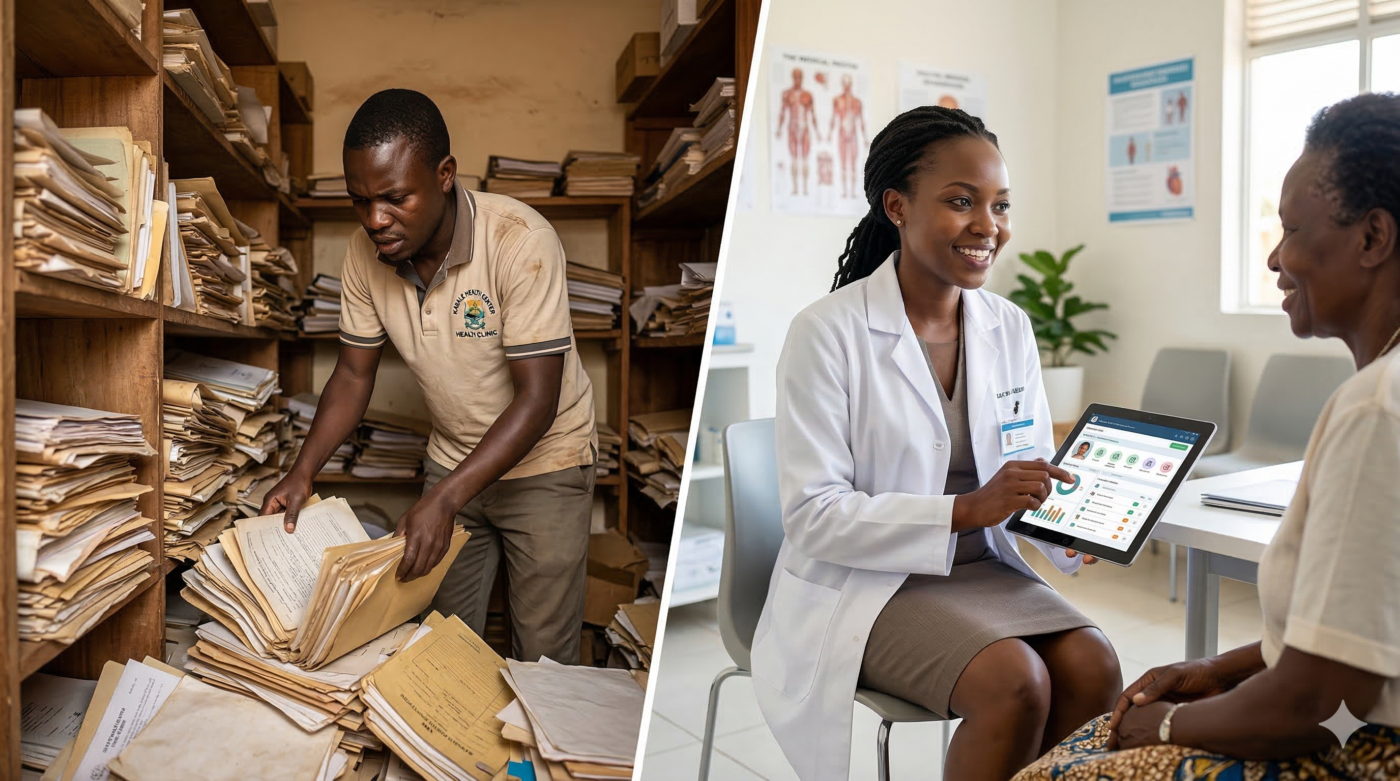
Walk into most district hospitals or private clinics in Uganda today and you’ll still find patient registers, handwritten prescriptions, and billing records managed in spreadsheets – or not at all. This isn’t a judgment; it’s the reality of a health system that has historically prioritised clinical capacity over administrative infrastructure.
Thank you for reading this post, don't forget to subscribe!But the cost of that gap is significant. Revenue leakage – the difference between services rendered and revenue actually collected – is one of the most under-discussed threats to hospital sustainability in Africa. It occurs through unbilled consultations, missed pharmacy charges, fraudulent waivers, and duplicate or ghost patient records. Globally, approximately 15% of claims are denied at first submission, and nearly two-thirds of those are never resubmitted – a pattern that is, if anything, more acute in under-resourced health systems where follow-up capacity is limited.
The context in Uganda is particularly pressing. Uganda has the highest out-of-pocket health expenditure in the East African region at 42%, and remains the only country in East Africa without a signed National Health Insurance Scheme Act – meaning the financial burden on both patients and facilities is structurally higher than in neighbouring countries.
What hospital management software actually does
Modern hospital management software – also called a Hospital Management Information System (HMIS) or HMS — integrates the clinical, administrative, and financial workflows of a health facility into a single platform. At its core, a well-designed HMS does the following:
- Registers patients once and maintains a longitudinal record across every visit
- Automatically generates billing entries at the point of service – consultation, pharmacy, laboratory, procedure
- Controls inventory in real time, flagging stock-outs before they become clinical risks
- Manages staff scheduling, payroll inputs, and HR records
- Produces reports for facility management, insurers, and government health authorities
- Interfaces with national health systems, community insurance platforms, and mobile payment systems
In Uganda specifically, the Ministry of Health’s digital health agenda is accelerating demand for exactly this kind of integrated infrastructure. The Uganda Health Information and Digital Strategic Plan – launched with support from WHO, UNICEF, and USAID – explicitly calls for institutionalising patient-level digital systems at the point of care.3
How EMR systems reduce revenue leakage
Revenue leakage in hospitals isn’t usually malicious – it’s structural. Services get rendered but never entered into a billing system. Drugs get dispensed without being charged. Insurance claims get submitted late or with missing documentation. A well-implemented EMR system addresses each of these systematically:
1. Automated charge capture at the point of care
When a clinician orders a lab test or prescribes medication inside an EMR, the billing entry is created automatically. There’s no gap between the clinical event and the financial record. Research on revenue cycle management shows that proactive revenue protection — closing gaps before claims are submitted — is far more effective than reactive denial management. EMR systems are the mechanism that makes this possible.
2. Insurance claim accuracy and speed
For facilities contracted with community schemes or private insurers, claim rejections are a major source of lost revenue. As Uganda’s health financing landscape evolves toward a formal National Health Insurance Scheme — with stakeholders calling for urgency at the 2025 National Dialogue on Health Financing — facilities with clean digital records will be far better positioned to participate. Streamline’s integrated Ubuntu community insurance product already connects 75,000+ subscribers to accredited facilities using exactly this infrastructure.
3. Pharmacy and inventory reconciliation
One of the highest-leakage points in any hospital is the pharmacy. Manual stock management creates gaps between what’s dispensed and what’s charged. An integrated HMS links dispensing directly to billing and flags discrepancies in real time – protecting both revenue and drug supply chains. Streamline SNAP extends this to system-wide analytics, giving facility managers a real-time view of stock and service delivery patterns across departments.
4. Audit trails and fraud prevention
Digital systems create immutable records of every transaction – who ordered what, when, and at what cost. This alone deters the informal waivers and under-billing common in cash-heavy, paper-based environments. It also creates the audit-ready documentation increasingly required by international partners, the Ministry of Health’s official EMRS implementation guidelines, and donor-funded health programmes.
The specific benefits of EMR systems in the African context
EMR systems designed in the Global North often fail in African health settings – not because of clinical shortcomings, but because they assume stable power, high-bandwidth internet, and administratively experienced teams. A systematic review published in npj Digital Medicine found that digital health technologies – including EMRs – hold substantial promise for transforming healthcare in Africa, but their success depends critically on offline capability, infrastructure-appropriate design, and adequate training support.
The EMR systems gaining real traction across East Africa are those built with a different set of assumptions:
- Offline-first architecture that syncs when connectivity is available
- Low-bandwidth interfaces optimised for 3G networks
- Local language support and simplified UX for clinical staff with limited tech exposure
- Integration with community health insurance platforms for last-mile coverage
- Pricing models that reflect the economic realities of public and mission health facilities
- Local support teams who understand the operational context
Streamline Health Tech has operated in Uganda since 2014 with precisely this philosophy. Their EMR is deployed in over 100 facilities across the country – including government hospitals, mission facilities, and private clinics. The system is cloud-based, integrates with Streamline Pay for cashless health payments, and connects to Ubuntu, their community health insurance product serving over 75,000 subscribers.
What facility managers should look for when choosing HMS software in Uganda
If you’re evaluating hospital management software for your facility, the decision framework should go beyond feature checklists. Here’s what matters most in the Ugandan context:
- Local deployment and support – can the vendor reach your facility when something breaks?
- Alignment with the Ministry of Health’s EMRS implementation guidelines
- Readiness to integrate with Uganda’s evolving National Health Insurance Scheme once enacted
- Scalability – can the system grow from a 20-bed clinic to a 200-bed hospital?
- Total cost of ownership, not just the licence fee – implementation, training, and ongoing support
- References from comparable facilities – see Streamline’s client portfolio and testimonials
The 2025 Heroes in Health Award from the Ministry of Health Uganda, awarded to Streamline Health for Use of ICT and Innovation to Improve Patient Care, signals the kind of institutional credibility that matters when making a long-term infrastructure decision for your facility. Streamline’s journey since 2014 – supported by organisations including Swiss Re and IFC/World Bank reflects the sustained commitment required to make digital health work at scale in East Africa.
The bottom line
Hospital management software is no longer a luxury for well-funded private hospitals. In 2026, it is the infrastructure layer that determines whether a facility can sustain itself financially, deliver safe clinical care, and participate in Uganda’s evolving health financing ecosystem. The WHO classifies digital health as a strategic lever to transform health systems, particularly in African countries and Uganda’s Ministry of Health is now actively implementing that strategy.8
The facilities that move first will have a structural advantage in a health system rapidly shifting toward data-driven accountability, insurance-based financing, and outcome-linked performance. The question isn’t whether your hospital needs a digital backbone. It’s whether you build it now or wait until the gap becomes a crisis.
Ready to see how Streamline EMR works in practice?
EMR Africa
Revenue leakage healthcare
Digital health East Africa
HMIS Uganda
References
- 1. HFMA (2026). Why AI is such a promising tool for eliminating a hospital’s revenue leakage. Healthcare Financial Management Association.
- 2. Bwire et al. (2022). Health Financing Reforms in Uganda: Dispelling the Fears and Misconceptions Related to Introduction of an NHIS. NIH/PMC.
- 3. WHO Regional Office for Africa (2021). Uganda’s Ministry of Health Launches Digital Health Strategic Plan.
- 4. Solventum (2025). 5 ways to prevent revenue leakage before claims are submitted.
- 5. Insurance Regulatory Authority of Uganda (2026). Prioritize NHIS: Put an end to unexpected medical bills.
- 6. Ministry of Health Uganda. Electronic Medical Records System (EMRS) Implementation Guidelines. MoH Knowledge Management Portal.
- 7. Manyazewal et al. (2021). The potential use of digital health technologies in the African context. npj Digital Medicine, Nature.
- 8. PMC (2025). African digital health strategic plans analysis — WHO Digital Health definition.