
Why Your Patient’s History Shouldn’t Disappear When They Change Clinics
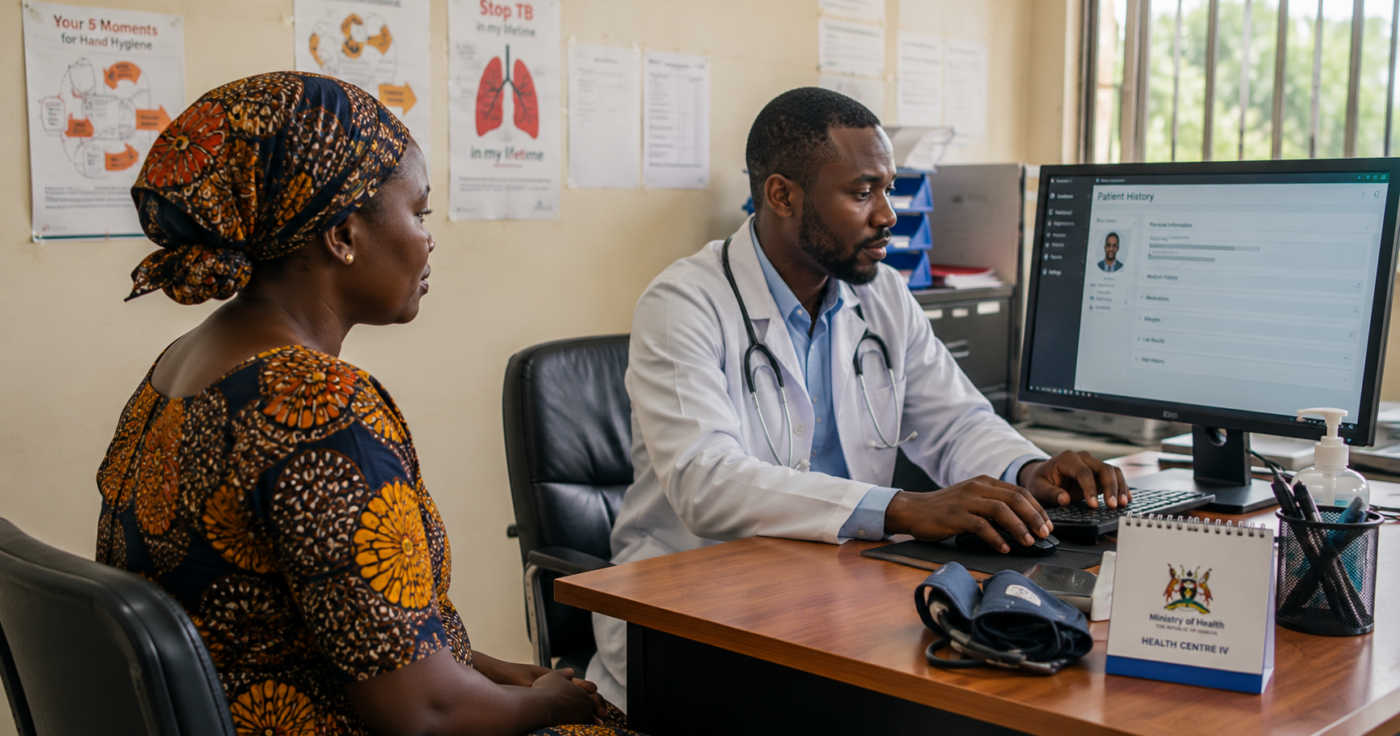
Table of Contents
Thank you for reading this post, don't forget to subscribe!- Why Electronic Medical Records in Africa Still Don’t Talk to Each Other
- The Real Cost of Fragmented Electronic Medical Records
- Fragmentation Isn’t a Technology Problem. It’s a Systems Problem.
- What Interoperable Electronic Medical Records Look Like in Practice
- Common Questions About Electronic Medical Records in Africa
- The Path Forward
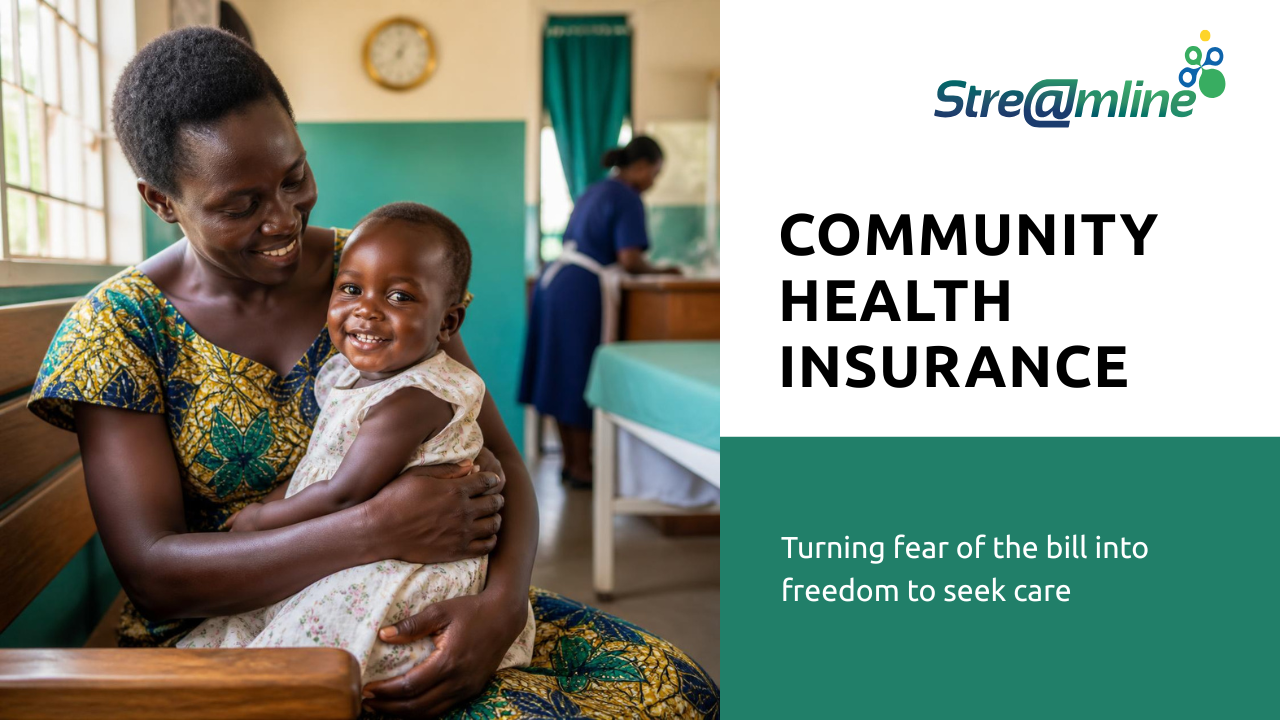
Electronic medical records in Africa are supposed to solve exactly this problem — yet for millions of patients, they still don’t. A mother carries her child from a village health post to a regional hospital. The referral note is a torn half-sheet of paper. By the time she reaches the front desk, it’s smudged, incomplete, or simply gone. The nurse on duty starts from zero: no allergy history, no vaccination record, no note on the fever that sent them there in the first place.
This isn’t a rare failure. Across East Africa, it’s closer to the default. In many towns, three clinics sitting within walking distance of each other run three different systems — or no electronic medical record system at all. A patient who moves between them doesn’t carry a digital record. They carry a memory, if they’re lucky, and a blank slate if they’re not.
Why Electronic Medical Records in Africa Still Don’t Talk to Each Other
Health authorities across the continent have been explicit about this for years: most African countries still don’t have a complete digital health strategy in place, and even where electronic medical records exist, they rarely talk to each other. A clinic’s system might work beautifully — for that clinic. The moment a patient crosses its boundary, the data stays behind.
The World Health Organization’s response has been to treat this as an urgent, structural issue rather than a technical footnote. Its Global Initiative on Digital Health exists specifically to help countries move past fragmented, donor-funded pilots toward coordinated, interoperable national systems. In late 2025, WHO and the European Union went further, announcing a joint initiative built around portable, secure health records that follow a patient wherever they seek care — including across borders and during emergencies.
A recent scoping review of interoperability and eHealth standards across Africa reached a similar conclusion from the research side: building resilient digital health systems requires stronger governance, sustained infrastructure investment, and real technical standards. Adopting electronic medical records isn’t enough on its own. Those records have to be able to move.
This isn’t just a technical gap. It’s an active topic at the highest levels of African health policy. At the sixth Africa Digital Health Summit in Abuja, experts openly debated how the continent can move beyond isolated pilot projects toward systems that survive once donor funding ends. Improved interoperability was named as one of the central requirements. A broader look at the region’s digital health investment landscape confirms the same pattern: fragmented data remains the central technical obstacle, even as funding and adoption accelerate.
The Real Cost of Fragmented Electronic Medical Records
The cost of fragmented electronic medical records isn’t abstract. It shows up in daily clinical decisions, and it shows up on a facility’s bottom line. Specifically, it looks like:
- Repeated tests. A lab result done last week gets redone this week, because no one at the new facility can see it.
- Wasted medication. A patient already on a treatment course starts over, or worse, receives something that interacts badly with a drug the new clinic didn’t know about.
- Lost trust. Patients stop believing that moving between facilities — for a referral, a second opinion, or simply because they relocated — will go smoothly. Some stop seeking care altogether rather than face starting over.
- Slower emergency response. In a crisis, the minutes spent reconstructing a patient’s history from scratch are minutes not spent treating them.
- Duplicated administrative cost. Every re-registration, re-test, and re-entry is staff time a facility pays for twice.
None of these costs show up on a single invoice. They accumulate quietly, one disconnected visit at a time.
Fragmentation Isn’t a Technology Problem. It’s a Systems Problem.
It’s tempting to think the fix is simply “more electronic medical records.” But scattered systems are exactly what created this mess. A facility that adopts digital records in isolation — disconnected from the referral hospital down the road, the pharmacy next door, the insurance scheme covering the patient — hasn’t solved fragmentation. It has digitized it.
Real interoperability means a patient’s record moves with them: from the district health center to the referral hospital, from the outpatient department to the pharmacy counter, from one insurance claim to the next. It means a clinician seeing a patient for the first time can still see everything that matters — allergies, prior diagnoses, ongoing medications, lab history — without a single phone call to a facility across town.
This is the gap an integrated Health Management Information System is built to close. Not a collection of disconnected modules bolted together, but one system where registration, clinical records, lab, pharmacy, billing, and insurance all draw from the same patient record.
What Interoperable Electronic Medical Records Look Like in Practice
At Streamline, this is the problem we built our EMR platform around. A patient registered at one facility on our network carries their history with them — clinical notes, lab results, prescriptions, insurance eligibility — to any other facility using the same system. A referral doesn’t mean starting over. It means picking up exactly where the last clinician left off.
That connectivity extends past the clinical record itself. A patient covered under Ubuntu community health insurance doesn’t need to re-verify eligibility at every new facility, because their insurance status travels with their electronic medical record. And because SNAP Analytics draws from the same connected data, facility administrators can see patterns across their full patient population — not just the slice that happened to walk through one clinic’s doors.
Across the 100+ health facilities we work with in East Africa, this isn’t a hypothetical benefit. It’s the daily difference between a nurse spending the first ten minutes of a consultation reconstructing history from a patient’s memory, and spending that time actually treating them.
That’s the principle behind everything we build: we take care of the data, so medics can take care of patients.
Common Questions About Electronic Medical Records in Africa
What is an interoperable electronic medical record? An interoperable electronic medical record is one that can be accessed, updated, and understood by more than one facility or department — not just the clinic that first created it. It follows the patient, rather than staying locked inside a single system.
Why do so many African clinics still use different, disconnected systems? Most digital health tools on the continent were adopted facility-by-facility, often through separate donor-funded pilots, without a shared national or regional standard governing how records should be structured or exchanged. The result is many good individual systems that can’t speak to one another.
Does interoperability mean every clinic needs the same software? Not necessarily — but it does mean systems need shared standards for how data is structured and exchanged. In practice, the fastest way for a network of facilities to achieve real interoperability today is to run on one connected platform, which is why integrated EMR systems like Streamline’s are gaining ground across East Africa.
How does this affect health insurance claims? Fragmented electronic medical records slow down insurance processing, because claims often can’t be verified without a phone call or a paper trail between the facility and the insurer. Connected records let eligibility and treatment history move with the claim, cutting delays for both patients and facilities.
The Path Forward
Solving fragmentation at a continental scale will take shared standards, government-backed platforms, and years of coordination between health ministries and technology providers. That work is already underway, and it matters.
But facilities don’t have to wait for a continental solution to fix this for their own patients. An integrated electronic medical record system — one that connects records, labs, pharmacy, billing, and insurance into a single patient view — closes the gap today, one facility and one referral network at a time.
The mother carrying her child between facilities shouldn’t have to also carry the burden of being the only record-keeper. Her child’s electronic medical record should already be there when she arrives.
Ready to see what a connected electronic medical record system could look like for your facilities? Book a demo with Streamline or explore our EMR platform to learn more.
Sources & Further Reading
- World Health Organization — Global Initiative on Digital Health (GIDH)
- World Health Organization — WHO and the European Union launch collaboration to advance digitized health systems in sub-Saharan Africa (October 2025)
- PMC / National Library of Medicine — Adoption, barriers and opportunities of interoperability and eHealth standards in Africa: a scoping review
- BusinessDay NG — Africa seeks to scale digital health solutions at ADHS 2026
- Kapsule — Digital Health in Africa: Trends, Investment, and Impact