
A health management system in Africa is no longer a luxury reserved for large referral hospitals. It is the operational foundation that separates high-performing facilities from those still drowning in paper. Here is everything a hospital administrator, clinic owner, or health IT decision-maker needs to know.
Why a Health Management System in Africa Is Now Mission-Critical
Africa's healthcare sector is at a defining moment. The continent's digital health market was valued at $3.8 billion in 2023 and is growing at a remarkable 23.4% annually — driven by an urgent need to do more with fewer resources. Yet despite this momentum, only 15% of rural clinics currently use electronic health record systems, compared to 45% in urban centres. That gap is where patients fall through the cracks.
A health management system in Africa addresses this directly. It is a software platform that connects every department of a health facility — from registration and outpatient consultations to pharmacy, laboratory, billing, and ministry reporting — under one unified digital system. When it works well, it transforms how facilities operate, how clinicians make decisions, and how administrators track performance.
What Does a Health Management System Actually Do?
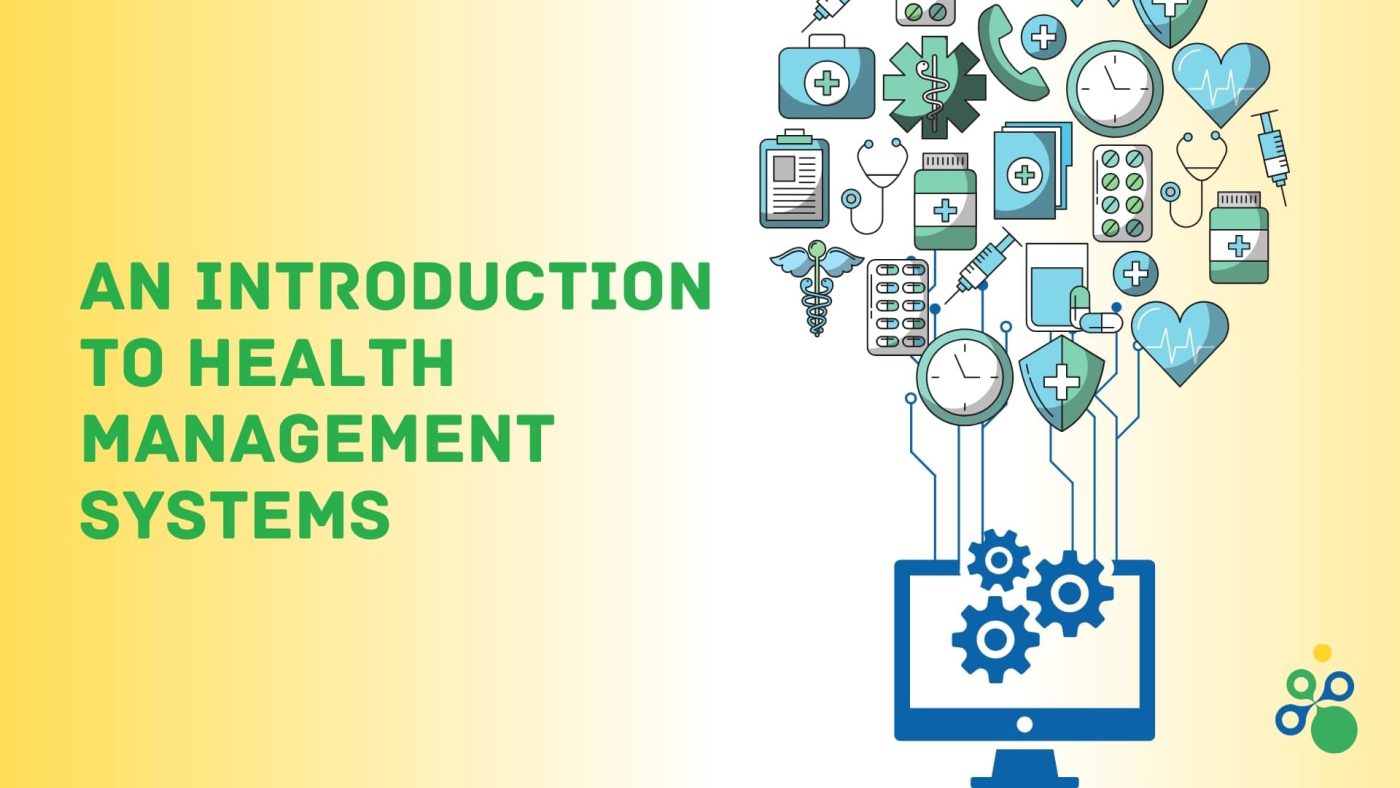
The core purpose of a health management system in Africa is to replace manual, paper-based processes with digital workflows that are faster, more accurate, and impossible to lose. At its most comprehensive, a well-implemented HMS covers seven interconnected functions.
1. Centralised patient records
Every patient interaction — from the first visit to the most recent prescription — is stored in a searchable digital record. Doctors can see a patient's full history in seconds rather than hunting through physical files. Test results, diagnoses, allergies, and treatment plans are all in one place, accessible across departments and even across facilities.
2. Appointment scheduling and patient flow
Automated scheduling tools reduce waiting times and help administrators manage patient volumes across departments. Resources — beds, theatres, specialist slots — can be allocated in real time based on actual demand rather than guesswork.
3. Billing and financial management
An integrated health management system eliminates the gap between services rendered and services billed. Every consultation, drug dispensed, or test ordered is automatically linked to a patient account. Combined with a cashless payment module, this closes the revenue leakage that costs African health facilities significant income every month.
4. Pharmacy and inventory tracking
Drug dispensing is connected to prescriptions, and stock levels update in real time. Facilities always know what is on the shelf, what needs reordering, and which items are approaching expiry — before the stockout or the write-off happens.
5. Laboratory and investigation management
Test requests flow directly from the clinician to the lab without paper requisitions. Results return digitally to the patient record, reducing turnaround time and eliminating the risk of results going missing between departments.
6. HMIS and ministry reporting
One of the most time-consuming tasks in any Ugandan or East African health facility is compiling Health Management Information System reports for the Ministry of Health. A good HMS generates these automatically from the data already captured — no manual tallying, no backlogs, no late submissions.
7. Clinical decision support
The best health management systems in Africa do not just store data — they use it. Patient safety prompts, drug interaction alerts, and evidence-based treatment reminders help clinicians make better decisions, especially in high-volume settings where staff-to-patient ratios are stretched.
The Evolution of Health Management Systems in Africa
Understanding where health management systems in Africa came from helps explain why the transition to modern platforms matters so much right now.
Before computerisation, everything ran on paper — patient registers, stock books, HMIS tally sheets filled in by hand at the end of each month. The 1990s brought the first integrated hospital information systems to large teaching hospitals, combining administrative and clinical data for the first time. The 2000s saw wider electronic medical record adoption globally, though most African facilities lagged due to cost and connectivity barriers.
The 2010s changed the equation. Cloud-based systems lowered the cost of entry dramatically. Mobile health platforms extended reach to rural and community settings. And the explosion of mobile money across East and West Africa created infrastructure for cashless transactions that many health systems are only now beginning to leverage.
Today, in 2026, the WHO African Region recognises digital health as integral to health system strengthening, with over 40 countries having adopted DHIS2 for national health information management. AI-assisted diagnostics, predictive analytics, and offline-capable mobile EMR platforms are no longer experimental — they are being deployed at scale across the continent.
The adoption of electronic and web-based systems in over 40 African countries has replaced the manual, paper-based health information management that previously caused inaccurate, late, and incomplete reporting to ministries of health. — PMC: Digital Health in the African Region, 2023
What to Look for in a Health Management System for Africa
Not every health management system is built for the African context. Many solutions developed for European or North American health systems assume reliable internet, large IT teams, and significant capital budgets — none of which describe the typical Ugandan district hospital or private clinic.
A genuinely fit-for-purpose health management system in Africa needs to work offline or on low-bandwidth connections, be intuitive enough for staff with basic computer skills, be priced for African facility budgets, come with local support rather than expensive foreign consultants, and generate the specific HMIS reports required by national ministries of health.
It also needs to integrate all key functions — clinical, financial, and administrative — so that data captured once flows through the whole system without duplication or re-entry.
How Streamline Delivers a Complete Health Management System for Africa
Streamline EMR is built from the ground up as a health management system for Africa. Developed in Uganda and already operating in 100+ health facilities across the continent, it covers every function described above in a single integrated platform — and it works both online and offline.
The system includes over 10,000 patient safety prompts, automatic HMIS report generation, real-time stock tracking through Streamline SNAP, and fully cashless payment processing through Streamline Pay. For facilities offering community health insurance, Streamline Ubuntu connects over 75,000 subscribers to the hospital network seamlessly.
Recognised by the International Finance Corporation and World Bank Group as one of the top 20 companies addressing East Africa's health challenges, Streamline has facilitated over 2 million patient visits — and most facilities go live within one week of implementation.
Streamline takes care of data so medics can take care of patients. 100+ health facilities. 2 million+ patient visits. Live in under a week. See our clients →
The Future of Health Management Systems in Africa
The next phase of health management in Africa will be shaped by three converging forces. First, artificial intelligence embedded directly into clinical workflows — not as a separate tool, but as a layer within the EMR that flags risks, suggests diagnoses, and learns from each facility's data. Second, true interoperability: the ability for a patient's record to follow them between facilities, districts, and countries, so that care is never interrupted by a data gap. Third, the integration of community health data — from village health teams, mobile health workers, and wearable devices — into the same system that manages facility-based care.
African health facilities that invest in a robust health management system now are not just solving today's problems. They are building the data infrastructure that will define the quality of care in their communities for the next decade.
See Africa's most complete health management system in action
Streamline is trusted by 100+ facilities across Uganda and East Africa. Book a free demo and see how your facility can go fully digital in under a week.
Book a free demo →Sources
- Grand View Research — Africa Digital Health Market Size & Share Report, 2030
- PMC — Digital Health in the African Region Should be Integral to Health System Strengthening (2023)
- MOHAC Africa — Technology in African Healthcare: 2026 Digital Health Innovations
- World Health Organization — Digital Health